Trade show booth glossary
Booth types, display hardware, print files and show logistics, explained in plain English. Rules differ between shows, so always check your exhibitor manual for the details that apply to you.
Booth types7
TERMS- Inline booth
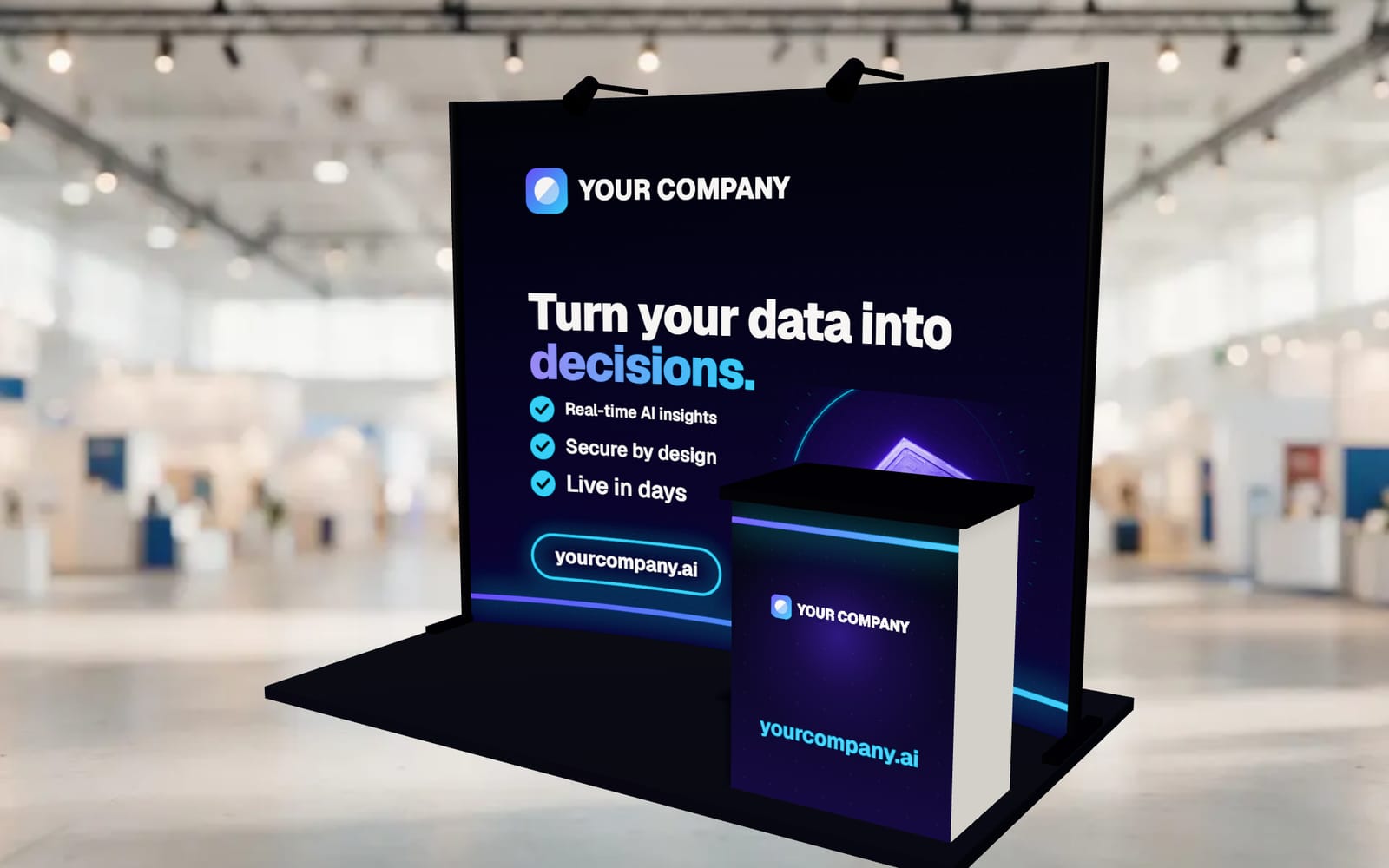
- A booth in a row of booths, open to the aisle on one side, with neighbours on the left and right. 10 x 10 ft and 10 x 20 ft are the most common sizes. See the 10x10 guide.
- Corner booth
- An inline booth at the end of a row, open to two aisles. The extra open side gives more visibility.
- Peninsula booth
- A booth open to aisles on three sides, usually backing onto another booth. Often 20 x 20 ft or larger.
- Island booth
- A booth open to aisles on all four sides, often 20 x 20 ft or larger, with graphics that work from every direction. See the 20x20 guide.
- Perimeter booth
- A booth along the outer wall of the hall. Shows often allow a taller back wall here than in the middle of the floor.
- Shell scheme
- A ready-made booth supplied by the organiser, with walls, a fascia board with the company name and basic lighting. Common at shows outside the US.
- Line of sight
- Rules that keep tall items out of the front part of an inline booth so neighbouring booths stay visible. Many shows limit height near the aisle; your exhibitor manual gives the exact numbers.
Display hardware12
TERMS- Back wall
- The main wall at the back of the booth, carrying the logo, the main message and the hero visual.
- Pop-up display
- A folding frame that springs open into a curved or straight wall, covered with one printed fabric graphic. Light and quick to set up. See the backdrop guide.
- Tension fabric display
- A frame of aluminium tubes with a printed fabric graphic stretched over it like a pillowcase. Common for back walls, towers and arches.
- SEG (silicone edge graphic)
- A fabric graphic with a thin silicone strip sewn around its edge, pushed into a groove in an aluminium frame for a tight, flat finish. Often used for backlit walls.
- Lightbox (backlit display)
- A frame lit from inside, usually with an SEG fabric graphic, so the graphic glows. Colours look brighter, and the artwork may need adjusting for backlighting.
- Header or fascia
- A sign above the booth or the front of a shell scheme that carries the company name, so the booth can be found from down the aisle.
- Hanging sign
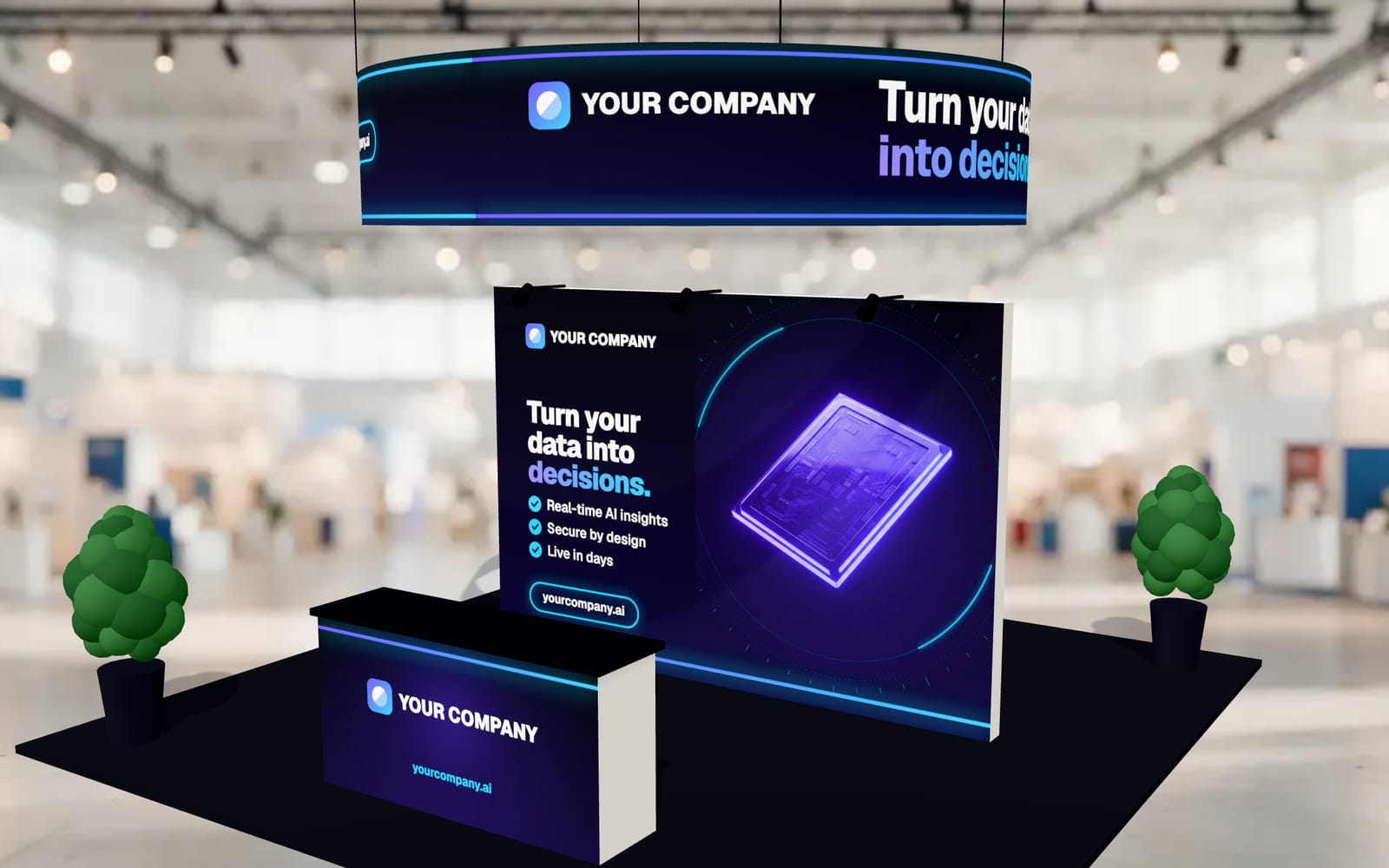
- A banner suspended from the hall ceiling above a larger booth, visible across the hall. Usually allowed only for island and some peninsula booths, and often subject to extra rules and fees.
- Counter or podium
- A small counter at the front of the booth with its own printed wrap. A good place for a QR code, near eye level.
- Tower
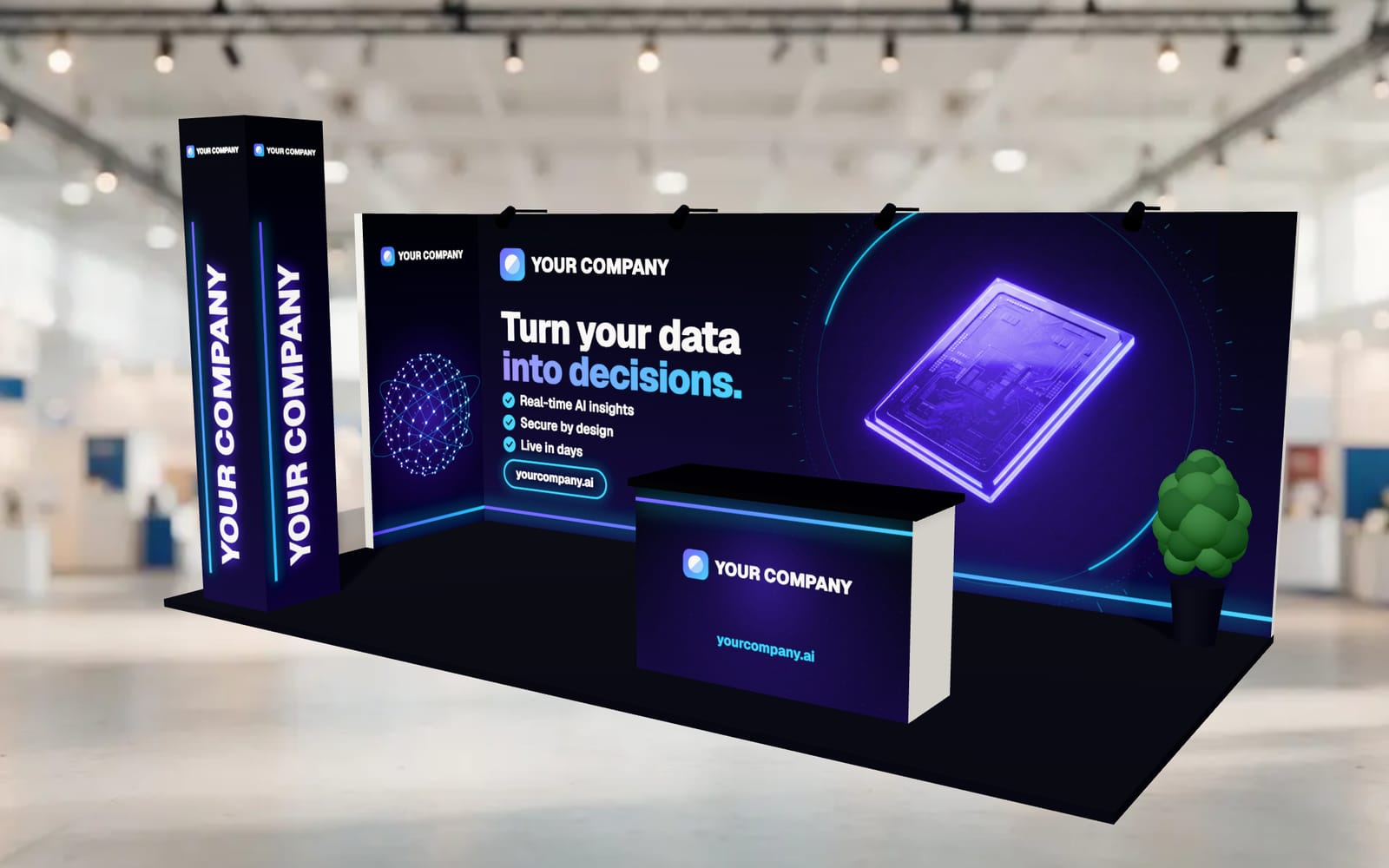
- A tall, narrow column with graphics on its sides, used to mark a booth from a distance.
- Step and repeat
- A backdrop printed with a repeating logo pattern, made for photos at launches and events. See the step and repeat guide.
- Table cover (table throw)
- A printed fabric cover for an exhibit table, usually with the logo on the front panel.
Graphics and print files8
TERMS- Template
- The supplier's file showing the exact size, bleed, safe area, seams and folds for your hardware. Booth artwork should always be built on it.
- Bleed
- Artwork that extends past the trim line, so no white edge shows after cutting or tensioning. The amount depends on the hardware.
- Safe area
- The part of the graphic that is guaranteed to be visible. Logos, text and QR codes belong inside it.
- Scale
- Large graphics are often built at a fraction of full size, such as 25 or 10 percent, to keep files manageable. The artwork size calculator works out the numbers.
- Resolution (ppi)
- Pixels per inch at the printed size. Booth graphics are seen from a distance, so many printers ask for roughly 100 to 150 ppi at full size for photos.
- Vector artwork
- Logos, text and shapes drawn as outlines rather than pixels, so they stay sharp at any size.
- Dye sublimation
- A printing method that bonds ink into polyester fabric. It is the usual way fabric booth graphics are printed, and colours can look slightly different from paper or vinyl.
- CMYK and Pantone
- CMYK is the four-ink mix used in printing; Pantone numbers name exact brand colours. Give the printer both, and ask for a proof of the colours that matter most.
Show logistics6
TERMS- Exhibitor manual
- The organiser's rule book and deadline list for a show: booth rules, heights, services, shipping and dates. Read it first. See the design timeline.
- General contractor
- The company the organiser appoints to run the show floor: carpet, furniture, freight handling and other services exhibitors can order.
- Drayage (material handling)
- The fee for moving your freight from the loading dock to your booth and back, usually charged by weight. The exhibitor manual lists the rates.
- Advance warehouse
- A warehouse that receives your shipment before the show and delivers it to your booth when setup begins. It has its own deadline.
- I&D (install and dismantle)
- Setting up the booth before the show and taking it down afterwards. Some halls require specific labour for this.
- Lead retrieval
- A scanner or app, often rented from the organiser, that captures visitor details from their badge for follow-up after the show.
Booth size guides
SIZES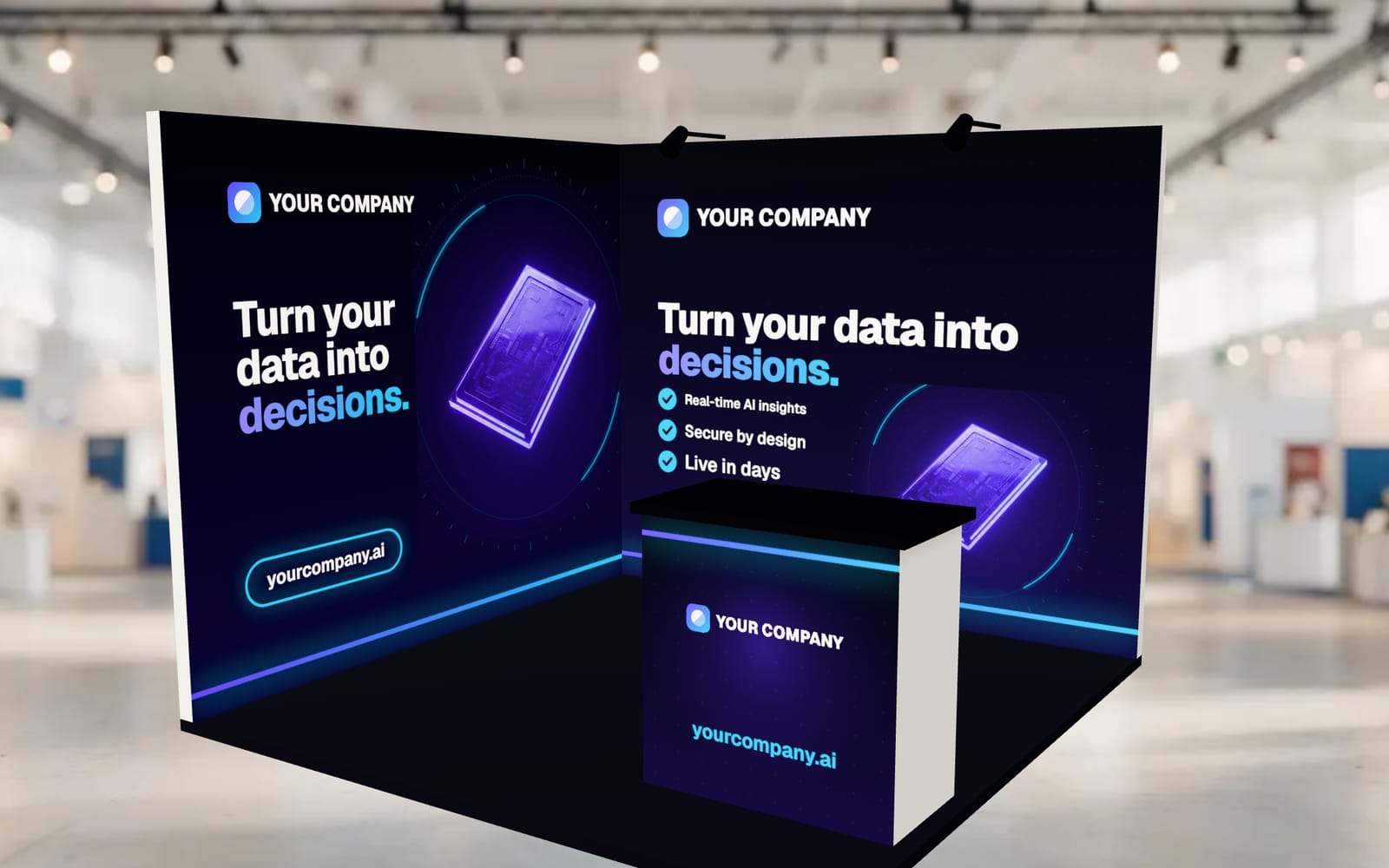
Rather leave the details to a designer?
Share the show, the booth size and your supplier's template. The reply comes from Sahariya.