How to brief a trade show booth designer: what to send and what to decide first
A clear brief saves rounds of changes and gets better design. It does not need to be long. It needs the facts the designer cannot guess and the decisions only you can make.
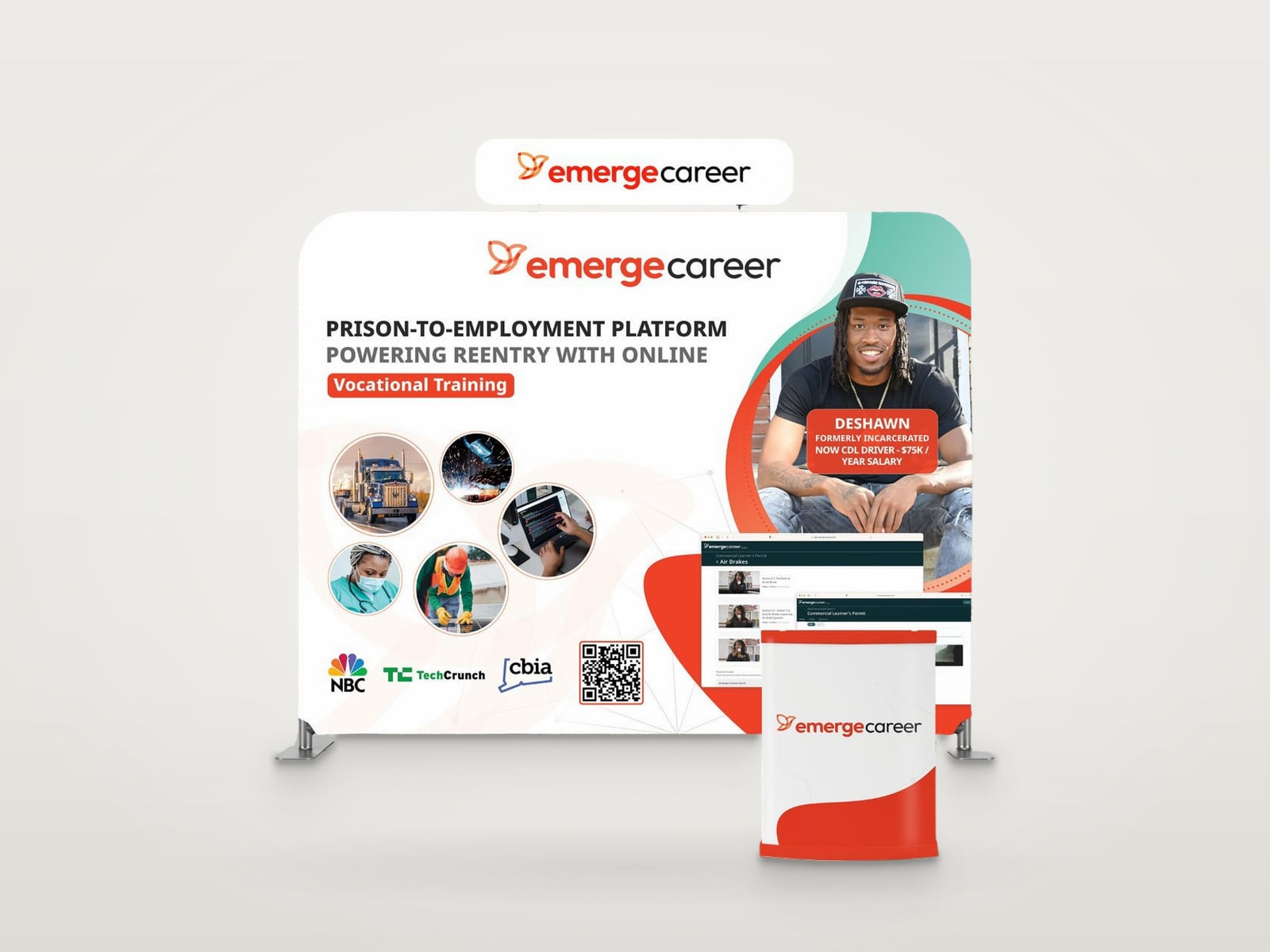
Real work: EmergeCareer fabric backwall and counter, shown on a presentation mockup.
The show and the space
The show name, dates and city.
The booth size and type: inline, corner, peninsula or island. The glossary explains the terms.
The hardware you will use or rent, with the supplier's graphic templates if you have them.
Any rules from the exhibitor manual about height or back walls.
Goals and audience
Why you are at this show: meetings, new leads, a launch, or being seen next to competitors.
Who you want to stop: their role, their industry and the problem they have.
What a good result looks like after the show, so the design supports it.
The message
Write down in one sentence what you do for the buyer. If you have a product or offer to feature, say which one. The designer can sharpen the words, but the decision about what to lead with is yours. If several people need to agree, agree on this sentence before design starts.
Brand files and content
Logo files in vector format (AI, EPS, SVG or PDF), plus brand colours and fonts.
Photos or product renders you have the rights to use, at the largest size available.
Any QR code destination, website address and booth number.
Examples of booths or designs you like, and ones you do not.
Dates and approvals
The printer's or supplier's artwork deadline, not only the show date.
Who reviews and who gives final approval, so feedback comes together in one round.
Any other pieces needed in the same look: table cover, roll-ups, flyers, cards. See the trade show checklist.
Start with a quick 3D draft
A rough booth with your logo and headline in Booth Studio is a useful attachment to a brief: it shows the size, the colours and the message you have in mind. The contact form can take the rest of the brief.
Questions
Questions
What should a trade show booth design brief include?
The show and dates, booth size and hardware with templates, your goal and audience, the one main message, brand files, photos, any QR or web addresses, the artwork deadline and who approves the design.
How long should a design brief be?
Usually a page is enough. What matters is that it answers the questions the designer cannot guess, such as the booth size, the audience, the main message and the deadline.
Do I need the supplier's templates before design starts?
Ideally yes, because they give the exact panel sizes, bleed and safe areas. If you have not chosen hardware yet, the designer can start from typical sizes and adjust once the templates arrive.
A week-by-week timeline for planning trade show booth graphics, from booking the space to show day, so the design is ready before the printer's deadline.
Practical trade show booth ideas for the back wall, the layout, small booths and lead capture, with what each idea is good for and how to test it first.
Common trade show booth design mistakes: too much text, a logo hidden behind people, a closed front, unclear messages and print problems, with a fix for each.
Want a booth that works on the show floor?
Share the show, the booth size and the one message visitors should remember. The reply comes from Sahariya.