Printed fabric
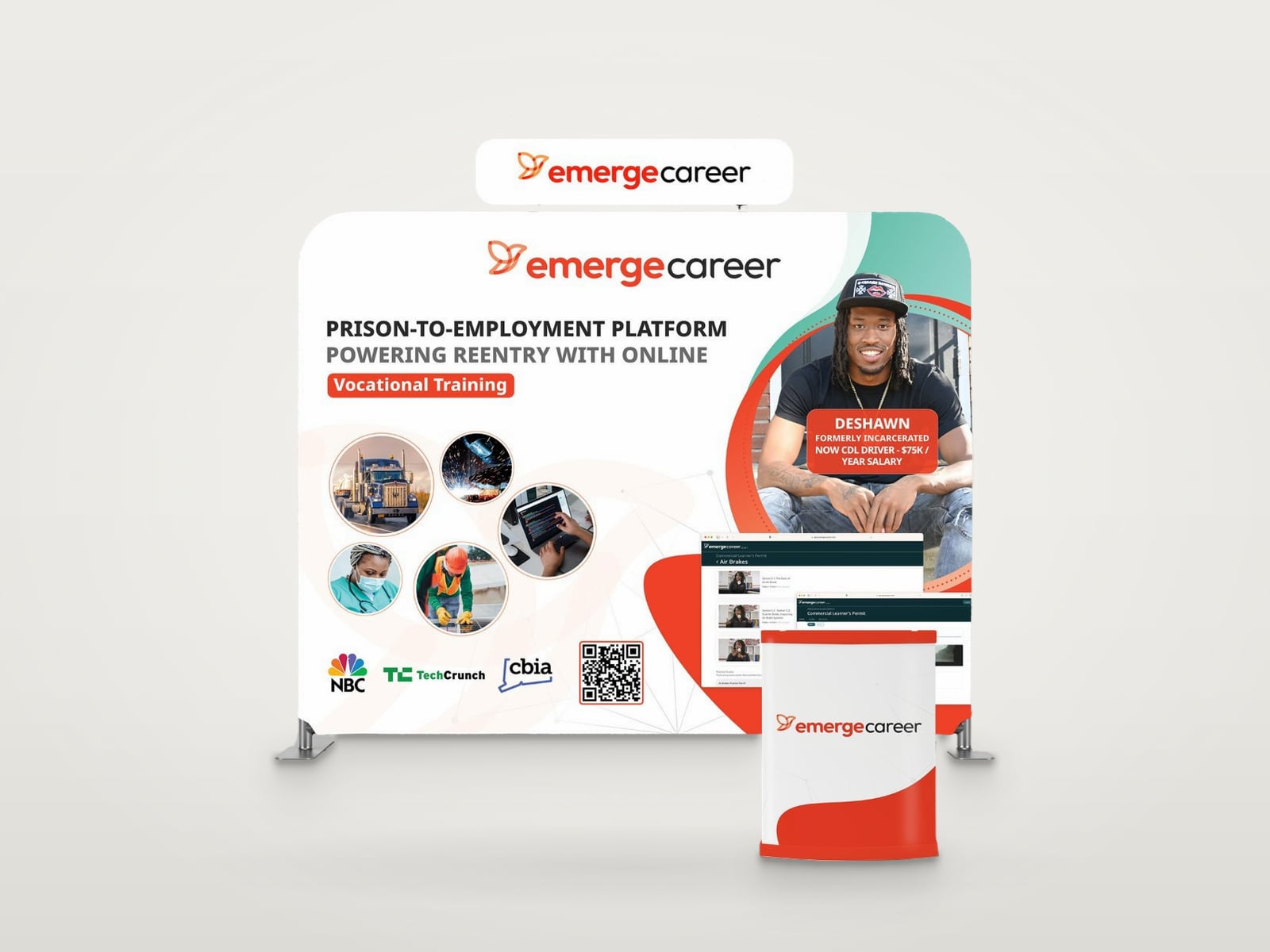
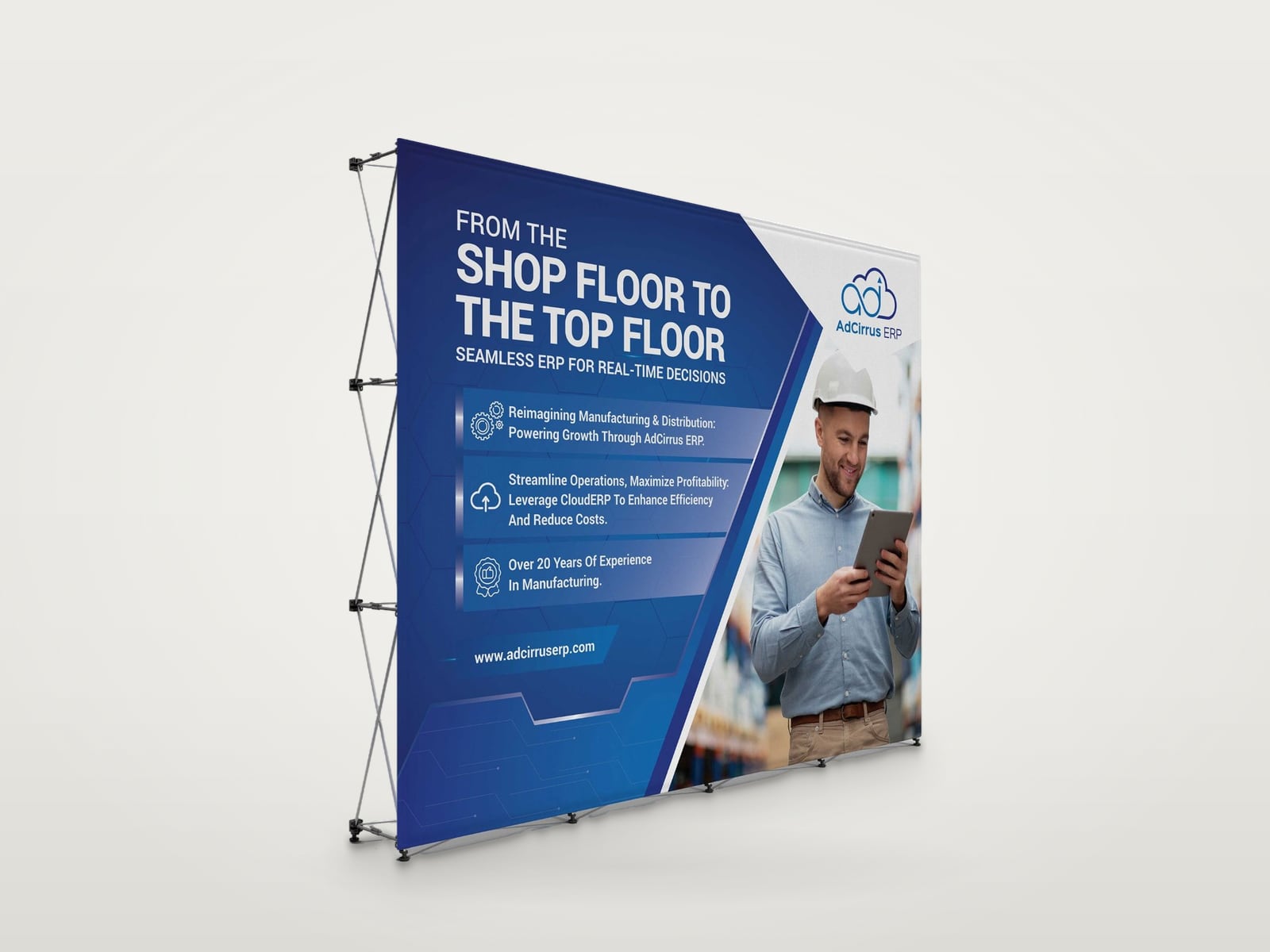
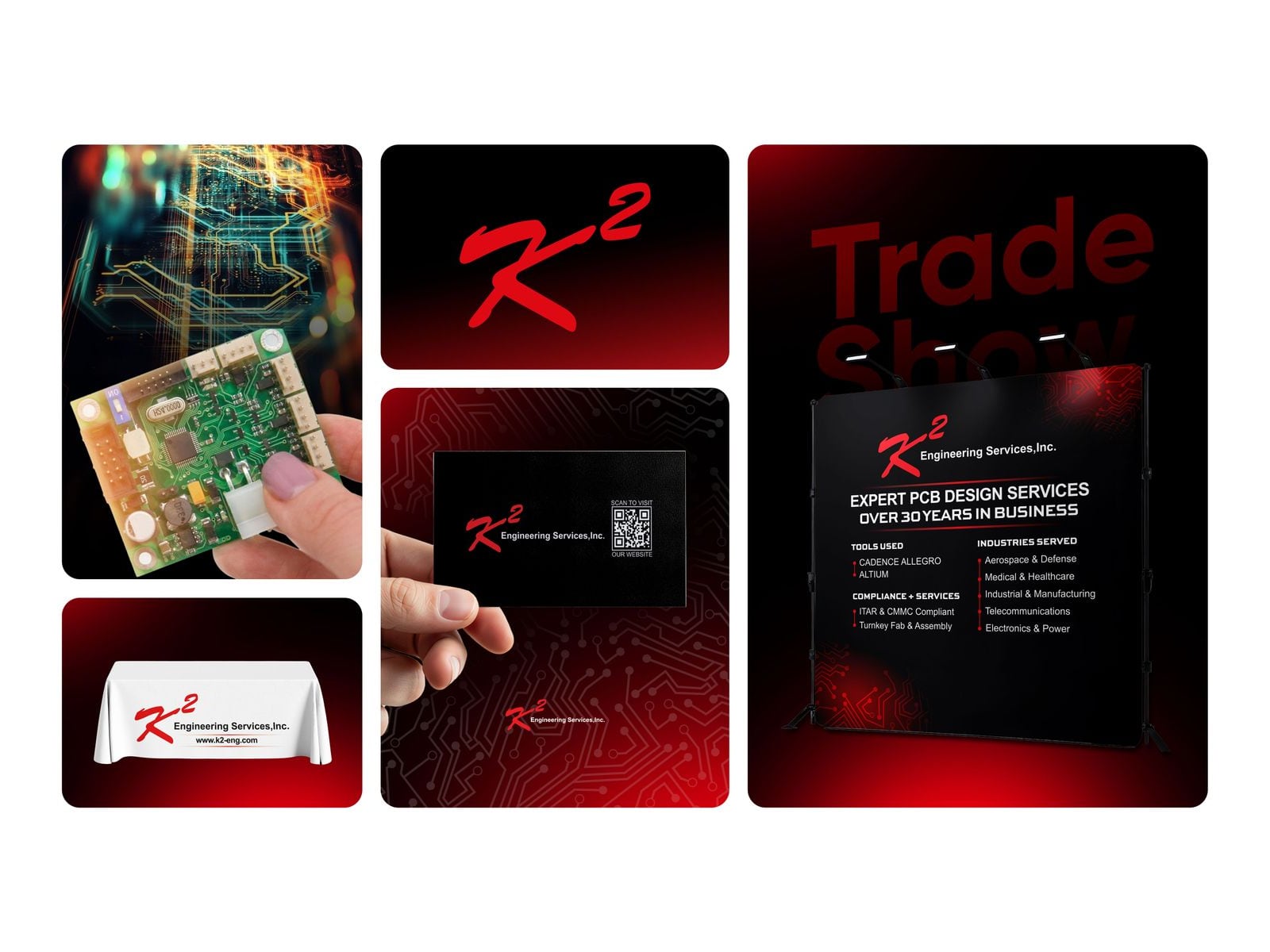
Most modern booth graphics are polyester fabric printed by dye sublimation, which bonds the ink into the fibres. Fabric is light, folds small, does not reflect light much and is used for pop-up backdrops, tension fabric walls, table covers and towers. Colours can look slightly different from paper, so ask for a proof of the colours that matter most.
SEG and backlit fabric
SEG graphics have a thin silicone strip sewn around the edge that pushes into a slot in an aluminium frame, giving a tight, flat finish. In a lightbox frame the same kind of fabric is lit from behind, so the graphic glows and stands out in a bright hall. Backlit artwork may need adjusting, because light shining through changes how colours and dark areas look. See SEG in the glossary.
Vinyl
Vinyl is tough and often used for roll-up banners, outdoor banners and some wall graphics. A glossy finish can reflect hall lighting and camera flash, so a matte finish is usually the safer choice for anything people will photograph, such as a step and repeat.
Printers usually offer a few kinds of vinyl. Ask which one they mean before you compare quotes:
- Smooth or blockout vinyl: a flat, opaque surface for roll-ups and indoor banners. The blockout layer stops light showing through from behind.
- Scrim vinyl: vinyl with a woven mesh inside for strength, common for outdoor banners hung with grommets.
- Mesh vinyl: full of small holes so wind passes through, used on fences and in windy places. Fine detail and small text print less sharply on it.
Rigid boards
Foam board, PVC board and aluminium composite panels are printed directly or with a mounted print. They suit shell-scheme panels, signs, counter fronts and anything that must stay perfectly flat. They are heavier and bulkier to ship than fabric, and corners can chip or dent in transit.
Fabric vs vinyl banner: which to choose
For most indoor shows fabric is the easier choice, and vinyl wins where weather, budget or a one-off event matter more. Side by side:
| Point | Fabric | Vinyl |
|---|---|---|
| Look under hall lights | Soft, little glare | Can shine unless matte |
| Weight and packing | Light, folds small | Heavier, rolls rather than folds |
| Creases | Usually relax once stretched | Can keep fold marks, so roll it |
| Outdoors | Mainly indoor; some outdoor fabrics exist | Handles rain and sun well |
| Cost | Often higher | Often the lower-cost option |
| Best for | Backdrops, walls, table covers, repeat shows | Roll-ups, outdoor banners, single events |
Quick comparison of all four
| Material | Good for | Watch for |
|---|---|---|
| Printed fabric | Backdrops, walls, table covers, travel | Colour can shift from paper; ask for a proof |
| SEG and backlit fabric | Frame walls, lightboxes, a premium finish | Backlit artwork may need adjusting |
| Vinyl | Roll-ups, banners, durable graphics | Glossy finishes reflect light and flash |
| Rigid boards | Shell-scheme panels, signs, counters | Weight, shipping size and chipped corners |
Which material for each booth piece
A common starting point, to adjust with your printer and your hardware:
| Piece | Usual material | Read more |
|---|---|---|
| Back wall or pop-up backdrop | Printed fabric or SEG | Backdrop guide |
| Roll-up banner | Blockout vinyl or fabric | Roll up banner design |
| Table cover | Polyester fabric | Table cover design |
| Counter or podium wrap | Fabric, vinyl or rigid panel | Counter design |
| Hanging sign | Light fabric or mesh vinyl, since venues often limit hanging weight | Hanging sign |
| Shell-scheme panels | Rigid board or vinyl | Shell scheme |
| Feather flags and tents | Outdoor polyester fabric | Feather flag and tent design |
Blockout for bright halls
Thin fabric and plain vinyl can let light through, so a lamp, window or another booth behind the graphic shows as a shadow or washes out the colours. A blockout layer or a lined fabric stops this. Ask for it on walls and roll-ups that stand in front of light, and on anything seen from both sides where the back print must not show through.
Banner finishing: hems, grommets and pole pockets
How a banner is finished decides how it hangs, so choose the finish together with the material and the hardware:
- Hemmed edges: the edge is folded and stitched or welded so it does not fray or tear. Most fabric and vinyl banners get this.
- Grommets: metal rings along the edge for ties or hooks. Common on vinyl banners hung on fences, rails or a frame.
- Pole pockets: a sleeve at the top and bottom for a pole, so the banner hangs flat and straight. Useful for indoor fabric banners and hanging pieces.
- Silicone edge: the strip used for SEG frames, described above.
- Ask how the banner will be attached at your stand before you order, since a finish cannot be added easily after printing.
Laminate and protection
Rigid panels and vinyl graphics that people will touch, lean on or wipe, such as counter fronts and low wall panels, can be protected with a clear laminate. It helps against scuffs and dirt and can turn a shiny print matte. Fabric is not laminated; it is folded, washed or replaced instead. Ask your printer whether a laminate suits the piece and how it changes the finish.
Recycled and recyclable options
If waste matters to your company, ask the printer which materials they offer with recycled content and which can be recycled after the show, and whether they take old graphics back. Fabric on a reusable frame also cuts waste, because only the print changes when your message does. Graphics without dates or offers last for more shows.
Fire rating
Many venues ask for graphics and fabrics that are flame retardant, and some ask to see a certificate. Fabric sold for trade show use is often treated, while standard vinyl and boards may need a fire-rated version. Check the exhibitor manual for the rule at your show and ask the printer for the certificate before you order, so it can travel with the graphics.
Choose by how you will use it
- How often it travels: for many shows a year, light fabric on a reusable frame is easier to ship and set up.
- Indoors or outdoors: rain, sun and wind point to vinyl, mesh or outdoor fabric.
- Lighting: bright spotlights and camera flash favour fabric or a matte finish.
- How long the message lasts: keep dates and offers off the large pieces, or put them on a smaller graphic you can replace.
- Set-up: if you set up yourself, choose pieces one or two people can carry and fit without tools.
What to ask your printer
- Which material and finish they recommend for your hardware, lighting and how often it will travel.
- Their template, bleed and resolution for that material. The artwork size calculator helps with the numbers, and the artwork checklist covers the files.
- A printed proof or sample for brand colours.
- Whether the material is flame retardant, and a certificate if the show asks for one.
- How the graphic should be packed, cleaned and stored between shows.