Exhibition stand design: a practical guide for B2B exhibitors
Exhibition stand and trade show booth mean the same thing: "stand" is the usual word in the UK, Europe and much of Asia, "booth" in North America. The design work is the same, with a few differences in how stands are sold and measured.
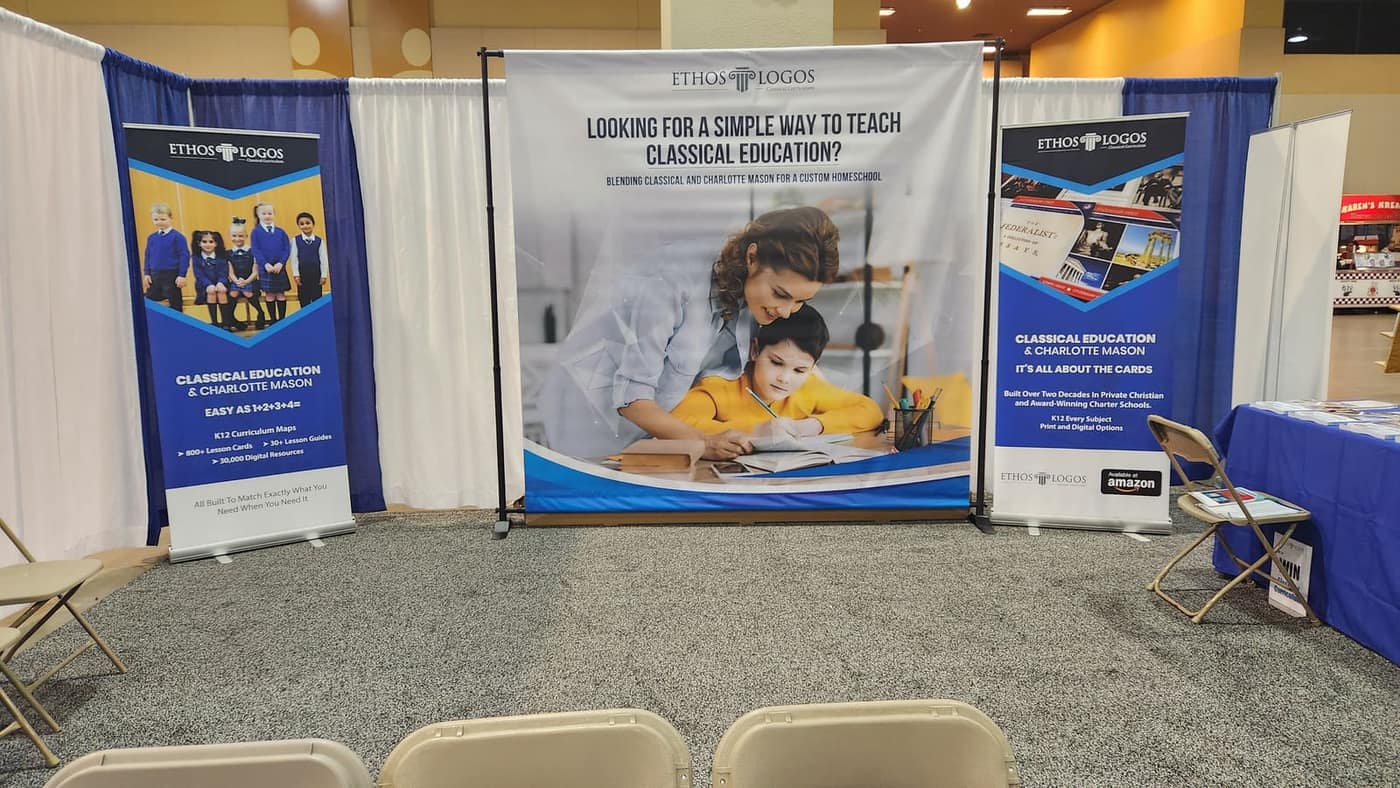
Real work at a show: Ethos Logos backdrop with two roll-up banners.
Shell scheme or space only
A shell scheme is a ready-made stand supplied by the organiser, with walls, a fascia board with your company name and basic lighting. You add graphics to its panels, at the sizes given in the organiser's exhibitor manual. Space only means you rent bare floor and bring your own stand, built or modular, within the show's rules on height and open sides.
Shell scheme is quicker and simpler for a first show. Space only gives you more freedom, and more to plan. The glossary explains these and other show terms.
Sizes in metres and feet
Stands outside North America are usually sold in metres, booths in North America in feet. A 3 x 3 m stand is close to a 10 x 10 ft booth (10 ft is about 3.05 m), so the 10 x 10 guide and a 3 x 3 m stand share most of their layout ideas. Always design to the exact sizes in the organiser's or supplier's templates, not to the rounded size.
Open sides change the design
Inline or row stand: one open side, so the back wall carries the message.
Corner stand: two open sides, so the message must read from both aisles. See the corner and peninsula guide.
Peninsula: three open sides, often with a central wall.
Island: open on all four sides, usually with a hanging sign or tall structure. See the 20 x 20 island guide.
The graphics to plan
Piece
What it does
Back wall
The main message and logo, placed high where the aisle can see them
Fascia or header
Your name above the stand, so it can be found from down the aisle
Side walls
Supporting points, product visuals or a second message for a second aisle
Counter
Your brand at eye level and a place for the conversation
Roll-up banners
Extra height and messages that move with you to the next show
One message from the aisle
Visitors decide in a few seconds whether to stop. Lead the back wall with one short sentence about what you do for the buyer, keep the logo and headline high, and keep the main words above counter height, about 1.1 m from the floor, so nothing important is hidden. Details belong on the counter, the side walls and in the conversation. What to put on a backdrop goes into this in more detail.
Files and deadlines
Organisers and stand suppliers set artwork deadlines, often weeks before the show, and each panel needs the right size, bleed and resolution. Work back from that deadline, not from the show date. The artwork checklist and the design timeline cover both.
See it before you print
A quick 3D preview shows whether the message reads and the logo sits clear of seams and the counter. Booth Studio builds one free in your browser; its sizes are in feet, so pick 10 x 10 ft for a 3 x 3 m stand or 10 x 20 ft for a 3 x 6 m stand.
Real examples4
REAL WORK
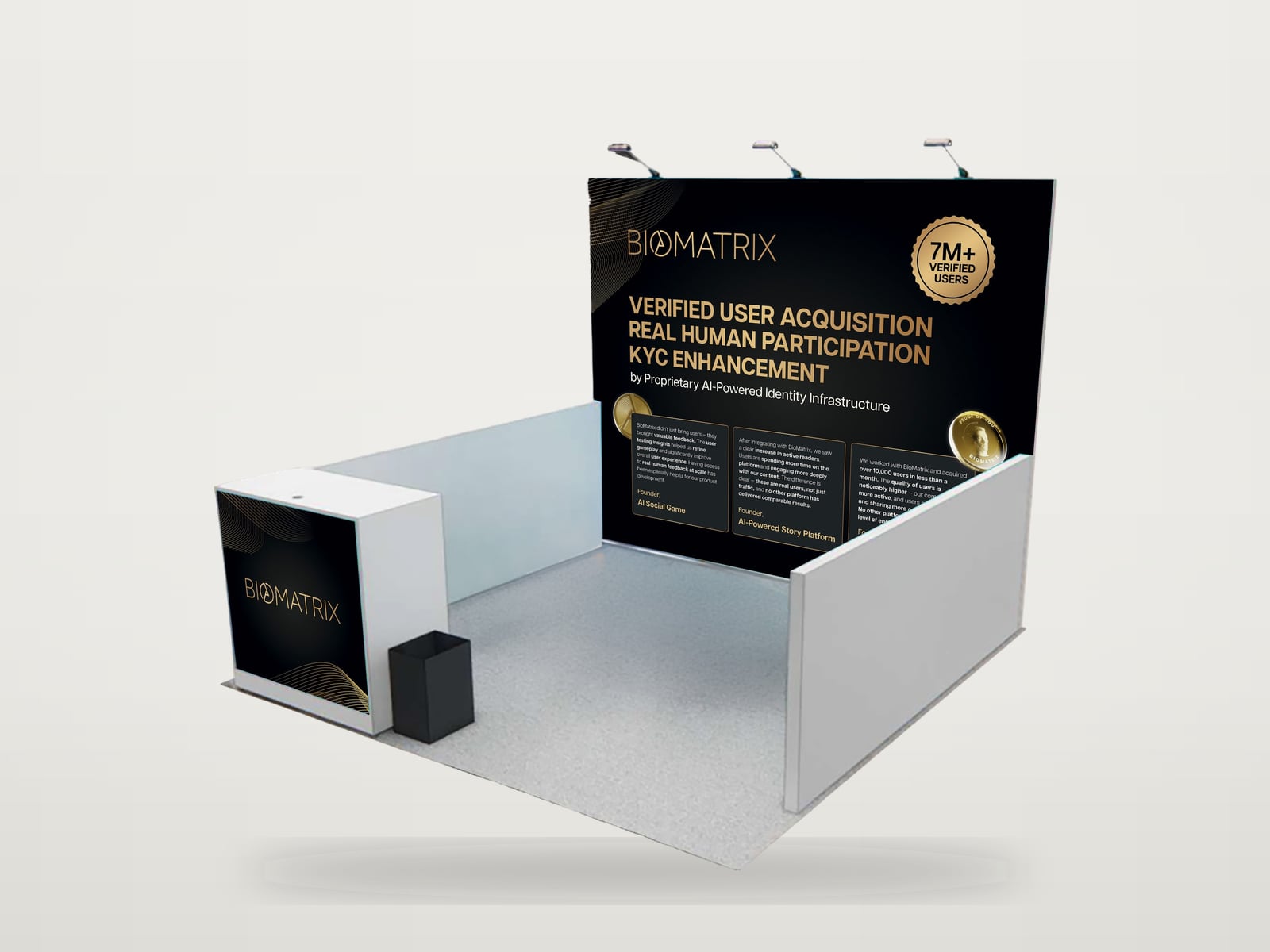
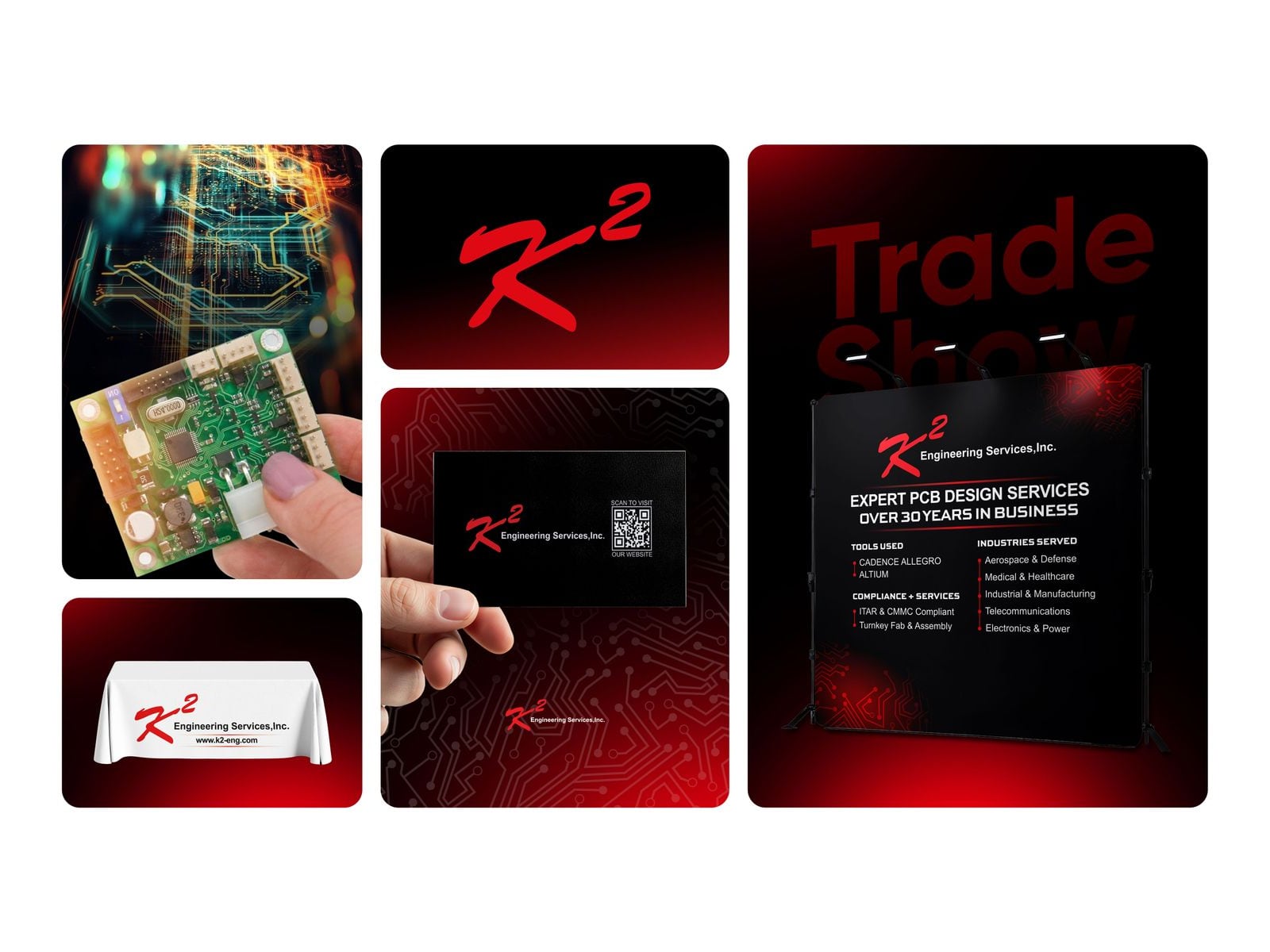
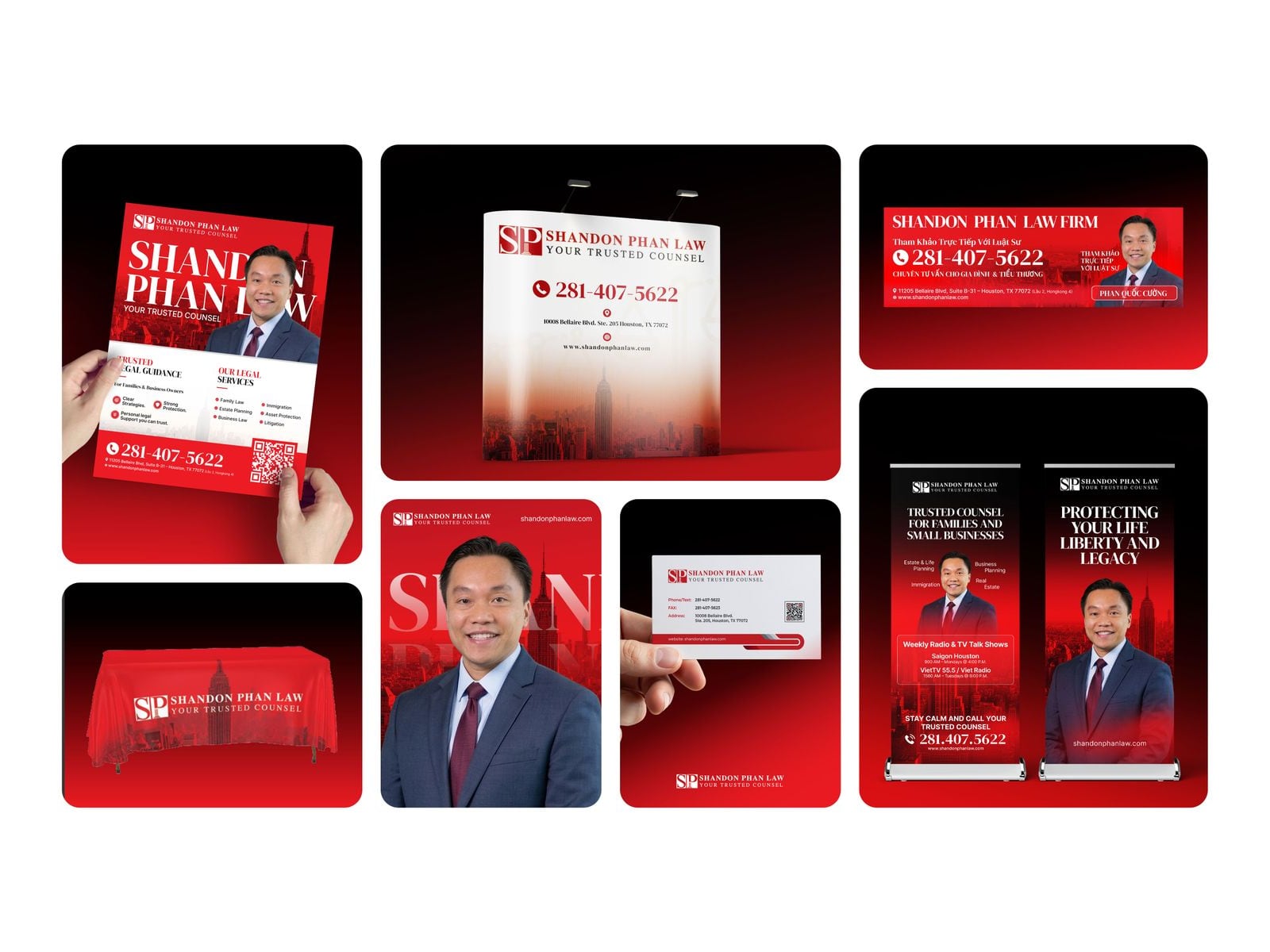
Real client designs by Sahariya, shown on presentation mockups. Open one to see it larger.
What is the difference between an exhibition stand and a trade show booth?
None in practice: both are the space and display an exhibitor uses at a show. Stand is the usual word in the UK, Europe and much of Asia; booth is the usual word in North America.
What is a shell scheme stand?
A ready-made stand supplied by the organiser, with walls, a fascia board with the company name and basic lighting. Exhibitors add their own graphics to the panels at the sizes in the exhibitor manual.
What size is a standard exhibition stand?
Shell scheme stands are often sold in units of 3 x 3 m, but every organiser sets its own sizes. Check the exhibitor manual and design to its exact panel sizes.
A week-by-week timeline for planning trade show booth graphics, from booking the space to show day, so the design is ready before the printer's deadline.
Practical trade show booth ideas for the back wall, the layout, small booths and lead capture, with what each idea is good for and how to test it first.
Common trade show booth design mistakes: too much text, a logo hidden behind people, a closed front, unclear messages and print problems, with a fix for each.
How to design graphics for a trade show counter or promo podium: what goes on the front wrap, the header sign and the top, plus print and QR code tips.