Why some booths stay empty
Most quiet booths have the same few problems. The back wall talks about the company instead of the visitor's problem, so people walking past cannot tell in a glance whether it is for them. A table runs across the front like a barrier. The team sits behind it looking at phones. And nobody outside the company knew the booth was there before the show opened.
Each of these is easy to fix, and none of them needs a bigger space. The rest of this article goes through them in the order a visitor meets them: before the show, in the aisle, at the booth and after the conversation.
Before the show: give people a reason to come
- Invite customers and prospects by email and on LinkedIn with your booth number and one reason to visit: a new product, a demo or a question you can answer for them.
- Book meetings in advance with the people you most want to see, and agree a time so they come to the booth rather than hoping to bump into you.
- Fill in your exhibitor listing and the show app completely, with a clear description, your logo and the booth number.
- Use what the organiser offers exhibitors, such as invitation links, banners or listing upgrades, if they are free or fit your budget.
- Add the show and booth number to every email signature on the team for the weeks before.
Pass the three second aisle test
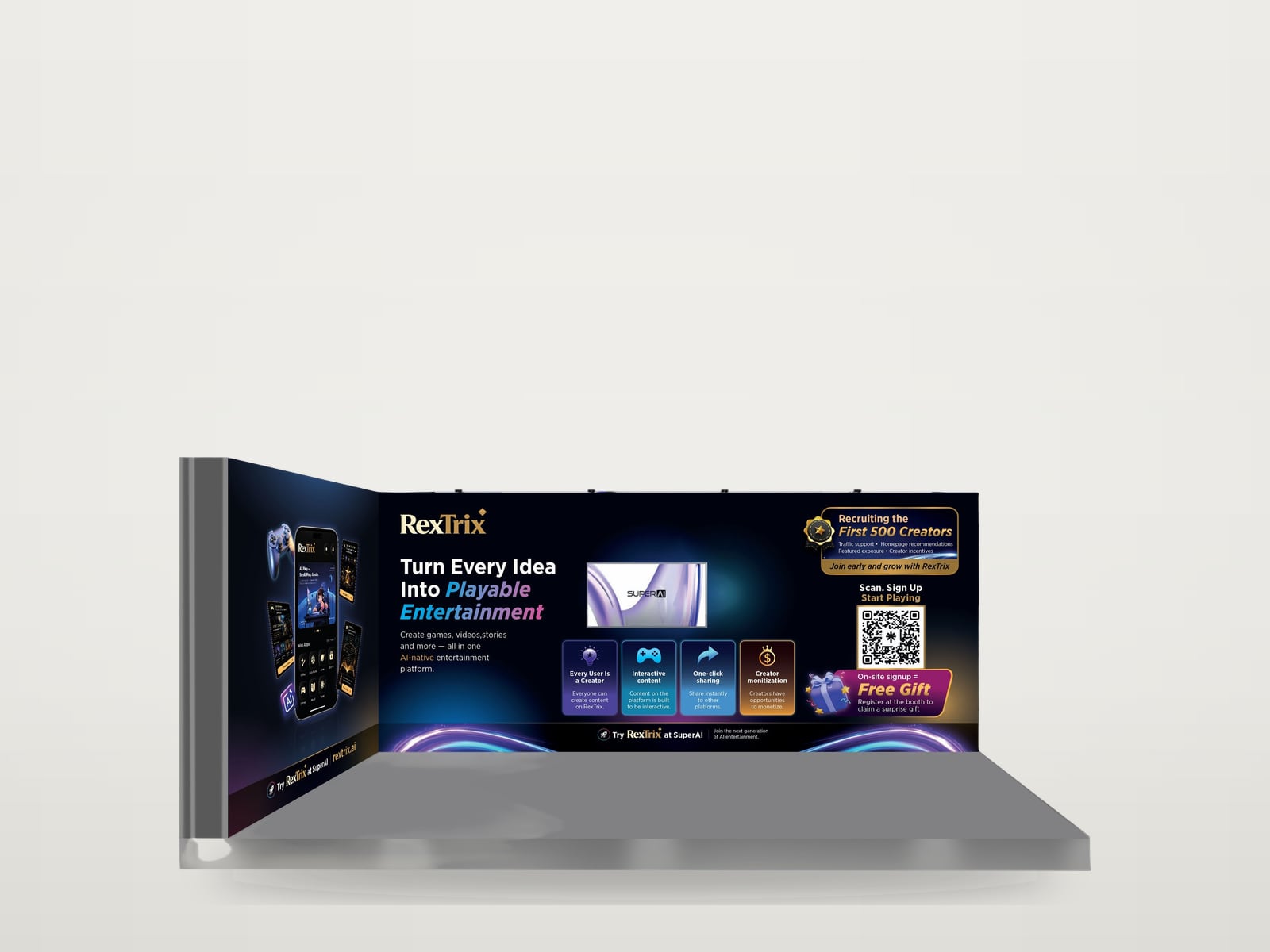
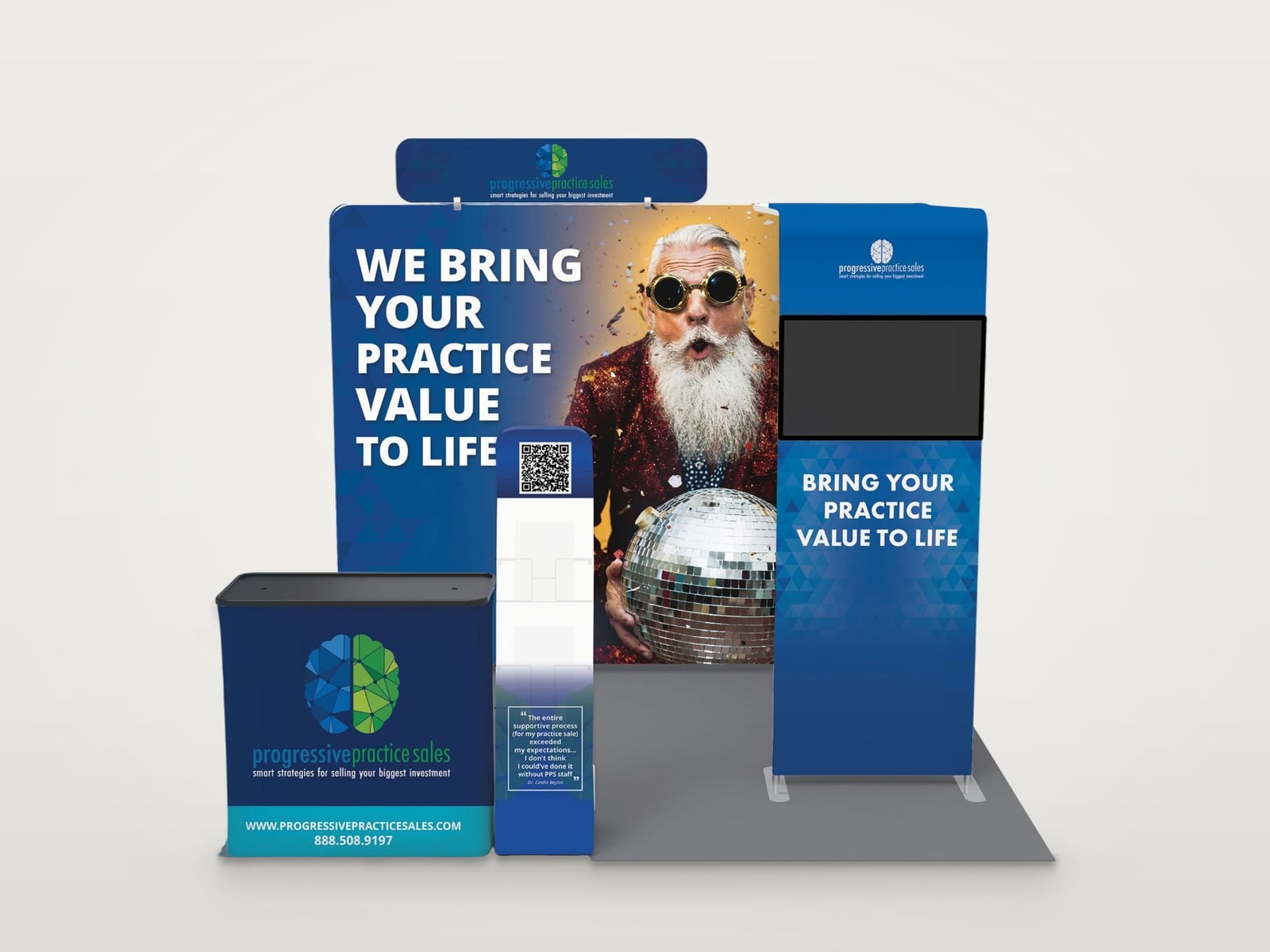
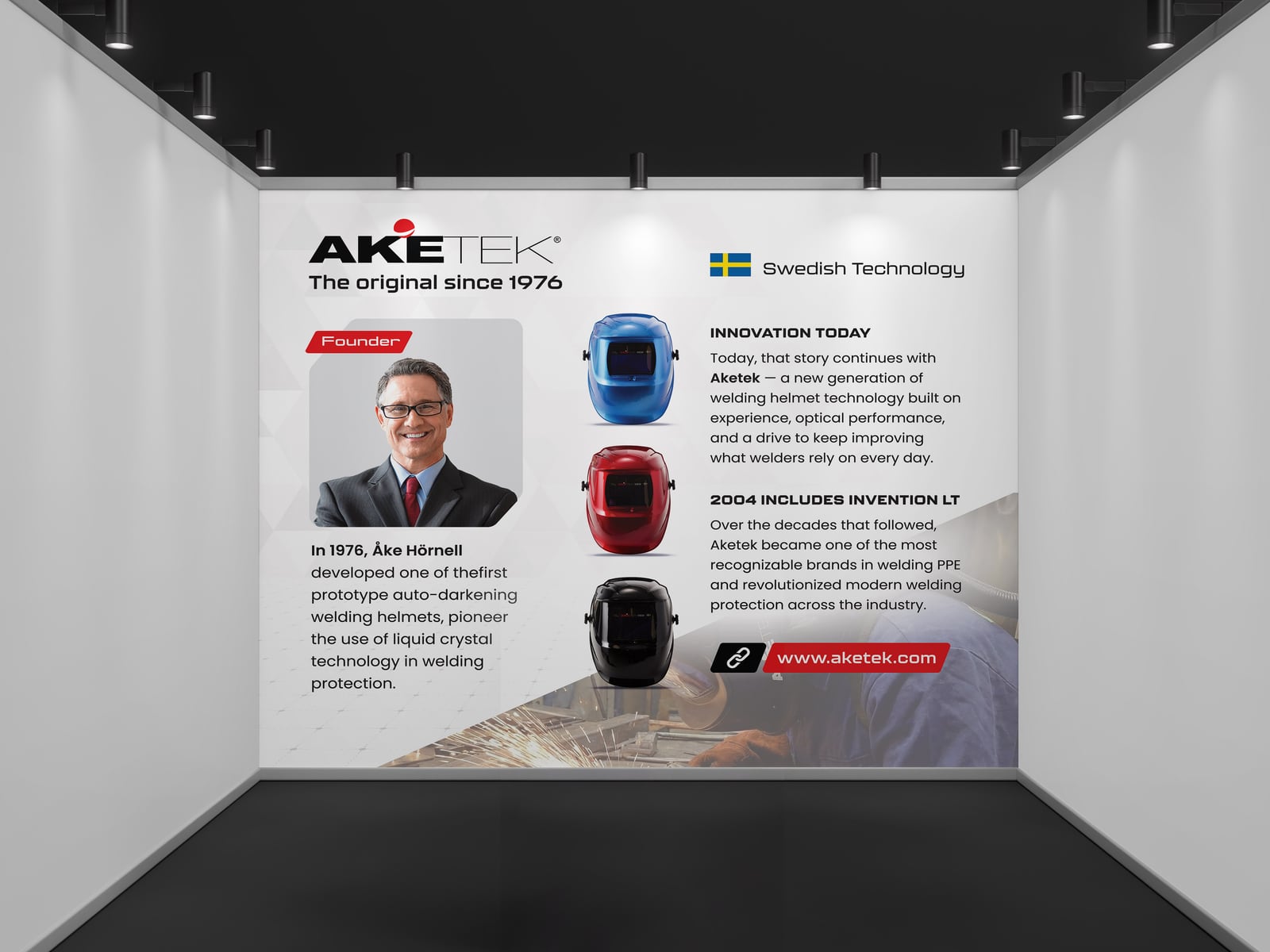
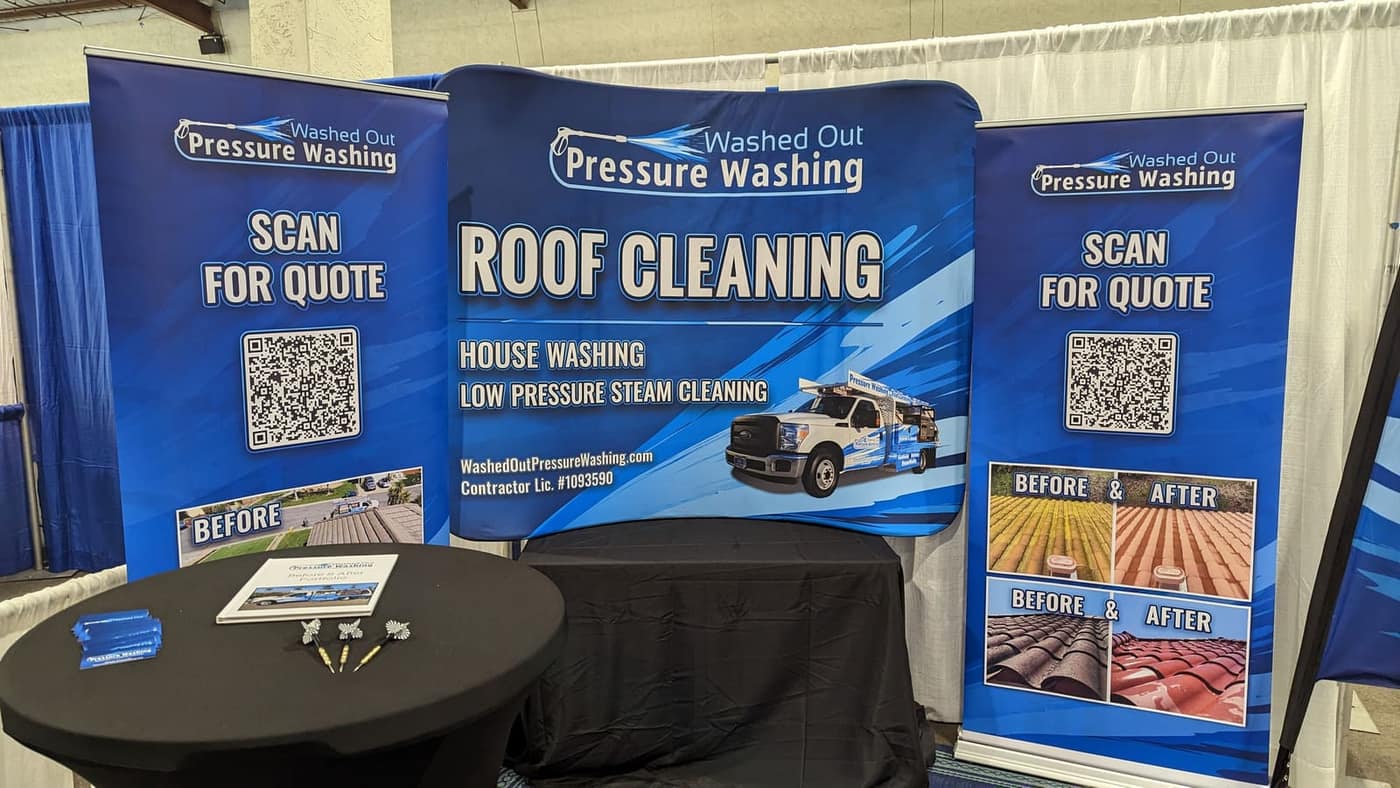
People walk past a booth in a few seconds and decide from a distance whether to slow down. Stand where they will stand, in the aisle a few steps away, and ask what you can read from there. If the answer is a logo and a slogan that could belong to anyone, they will keep walking.
- One short headline about what you do for the buyer, set high on the back wall where people can read it over heads.
- Your logo high as well, so people know who you are before they reach you.
- Strong contrast between the text and the background. Pale text on a busy photo disappears under hall lighting.
- Nothing important below counter height, where it will be hidden by the counter, furniture and people.
- Light on the back wall. A dim booth in a bright hall looks closed.
Open the booth up
A booth should look easy to step into. Keep the front clear, move the counter or table to one side rather than straight across the front, and leave room for a visitor to stand inside without blocking the aisle. Put the thing people can touch or watch near the front edge, where it pulls them in. The 10x10 layout ideas show open plans for a standard booth, and what to put on a backdrop covers the wall itself.
How the booth team draws people in
- Stand at the front edge of the booth, not behind the counter or in a back corner.
- Make eye contact and open with a friendly, open question about the visitor's work rather than a sales line.
- No phones, eating or long chats between colleagues while on duty: they make the booth look closed.
- Keep shifts short enough that people stay fresh, and agree who greets, who demonstrates and who takes notes.
- Wear the same colour or a simple branded shirt and a clear name badge, so visitors can tell who to talk to.
- Brief everyone on the one message and two or three questions that find out quickly whether a visitor is a fit.
Give people something to see or do
Movement catches the eye in a busy hall. A short product demonstration, a screen with a simple looping video, a sample people can pick up or a quick quiz all give someone a reason to stop for a moment. Post demo times on a small sign so people can come back. Keep anything interactive short and linked to what you sell, so the conversation after it is about the buyer's problem. Trade show booth ideas has a longer list of interactive ideas and giveaways.
Use the crowd you already have
People stop where other people are already standing. Plan demonstrations for the busy hours, ask the guests you booked meetings with to come to the booth, and keep a conversation going near the front rather than inside. During quiet hours, use the time to walk the aisles, meet neighbouring exhibitors and get ready for the next busy spell.
How to attract people to your exhibition stand on a small budget
- Spend on one clear back wall message before anything else. It works for every visitor, all day.
- Add light: a couple of clip-on lights on a backdrop often make more difference than extra graphics.
- Put a roll-up banner at the aisle edge with a single line or a QR code, so the booth reaches into the walkway.
- Do all the free promotion: invitations, LinkedIn posts, signatures and a complete show listing.
- Bring one small thing people can see or try instead of a table full of brochures.
- The small budget guide covers where else to save.
What to do and when
| When | What to do |
|---|---|
| Weeks before | Write the one message, design and preview the booth, book meetings, send invitations with the booth number. |
| Days before | Brief the team on the message, the opening questions and the shifts. Test every screen and QR code. |
| Setup day | Check the booth from the aisle: headline readable, front clear, lights on, nothing important hidden. |
| Show hours | Stand at the front, run demos at busy times, note every lead with what they asked about. |
| After the show | Follow up within days while the conversation is fresh, then note what drew people in and what did not. |
Visitors or leads? Measure the right thing
A crowded booth is not the goal on its own. A few good conversations with the right buyers are worth more than a long queue for a free gift. Ask a couple of quick questions to see whether a visitor is a fit, note what they need and the next step you agreed, and follow up soon after the show. The trade show checklist covers the days before and after, and the planning tips cover setting a goal for the show in the first place.
Common mistakes that keep visitors away
- A back wall that lists every service instead of one clear message.
- A table across the front of the booth with the team sitting behind it.
- Giveaways that attract people who will never buy, with no conversation attached.
- Promoting the show only once, or not at all, before it opens.
- A dim booth, or text too small to read from the aisle.
- No plan for capturing leads, so good conversations are forgotten by the next day.
See the booth from the aisle before you print
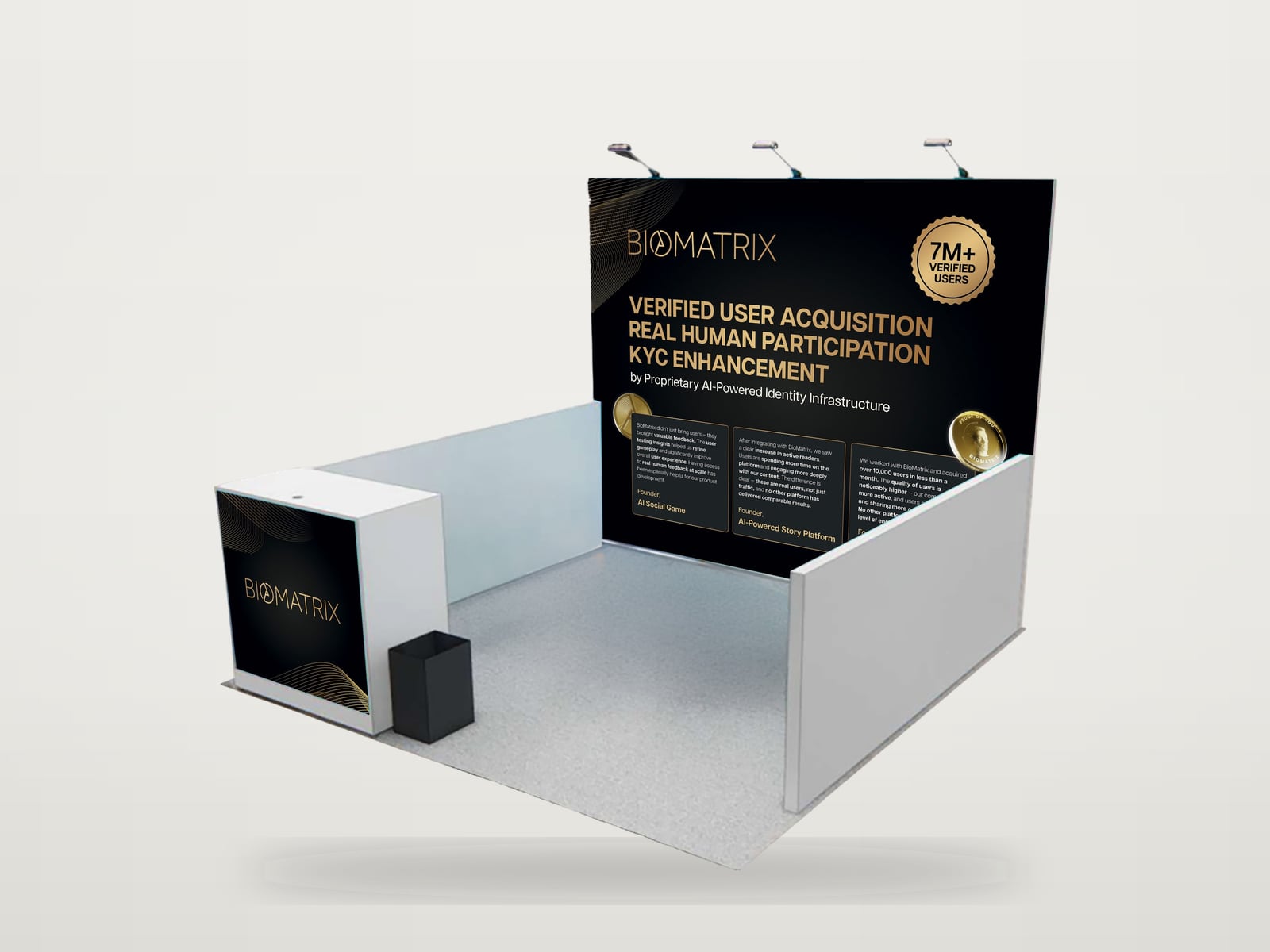
You can check most of the aisle test before the show. Booth Studio builds a free 3D preview of your booth in your browser with your logo and message, so you can turn it, look at it from the front and from an angle, and see whether the headline still reads. A designer's brief is the next step when you want the real artwork made.